


The Shoulder Minute: How Grooming Regulates the Horse’s Autonomic Nervous System
For many horse owners, the grooming ritual is a means to an end. It is the necessary removal of mud, dust, and loose hair before a saddle is placed or a rug is buckled. We focus on the aesthetic outcome: the shine of the coat or the cleanliness of the white socks. However, by treating grooming as a purely cosmetic chore, we often overlook the most powerful physiological tool at our disposal: the ability to communicate directly with the horse’s nervous system.
You may have experienced a horse that fidgets at the mounting block, pins its ears during saddling, or remains "braced" even after a light hack. These are not merely behavioural "quirks"; they are symptoms of a horse stuck in a state of sympathetic arousal: the "fight or flight" branch of the autonomic nervous system.
In this article, we will explore the science of tactile stimulation, the role of the Vagus nerve in equine relaxation, and why a specific sixty-second technique known as "The Shoulder Minute" can transform your horse's mental state before you even set foot in the stirrup.
The Autonomic Nervous System: The Gas and the Brake
To understand why grooming matters, we must first understand the horse's Autonomic Nervous System (ANS). The ANS controls involuntary functions: heart rate, digestion, respiratory rate, and thermoregulation. It is divided into two primary branches:
- The Sympathetic Nervous System (SNS): This is the "gas pedal." It prepares the horse for action. In a state of SNS dominance, the heart rate rises, muscles tense, and blood is diverted away from the digestive organs toward the limbs. A horse in this state is reactive, hyper-vigilant, and physically tight.
- The Parasympathetic Nervous System (PNS): This is the "brake." Often called the "rest and digest" system, it promotes healing, digestion, and: crucially for riders: physical and mental relaxation.
The transition between these two states is governed by sensory input. Because the horse is a prey animal, their skin is an incredibly sophisticated sensory organ, designed to detect the slightest vibration or touch. When we groom, we are not just cleaning hair; we are sending a constant stream of data to the horse’s brain. If that data is chaotic, rushed, or irritating, we keep the horse in a sympathetic state. If the data is rhythmic, purposeful, and anatomically targeted, we can manually trigger a parasympathetic response.

The Vagus Nerve and the Power of Touch
At the heart of the parasympathetic response is the Vagus nerve. This is the longest cranial nerve in the body, running from the brainstem down through the neck and into the chest and abdomen. It acts as a bidirectional "superhighway" between the brain and the internal organs.
When we stimulate specific areas of the horse's body, we activate the Vagus nerve, which sends a signal to the brain to lower the heart rate and release "feel-good" hormones like oxytocin. This process is known as increasing "Vagal Tone." A horse with high Vagal Tone can recover from stress quickly, remains supple through their topline, and is more capable of learning and focused work.
However, not all touch is created equal. Aggressive scrubbing or using tools with harsh, synthetic bristles can actually be overstimulating, pushing a horse further into a state of tension. This is why the quality of your tools and the intentionality of your touch are paramount. You can read more about how grooming supports lymphatic drainage and fascia to see how deep this physiological connection goes.
Why the Shoulder? The Science of Allogrooming
In a herd environment, horses engage in "allogrooming": mutual grooming where two horses nibble at each other's crests, withers, and shoulders. This isn't just about hygiene; it’s a social bonding ritual that lowers the heart rates of both participants.
The shoulder and wither area is a neurological "sweet spot." It is a non-vulnerable region (unlike the belly or the groin) where many nerve endings converge. By focusing our grooming here, we mimic the horse's natural social behaviour. This signals to the horse that they are safe, allowing the "guard" to drop.

The Protocol: Mastering "The Shoulder Minute"
The "Shoulder Minute" is a deliberate, sixty-second intervention designed to be the first step of your grooming routine. It acts as a bridge between the bustle of the yard and the focused environment of training.
How to perform the Shoulder Minute:
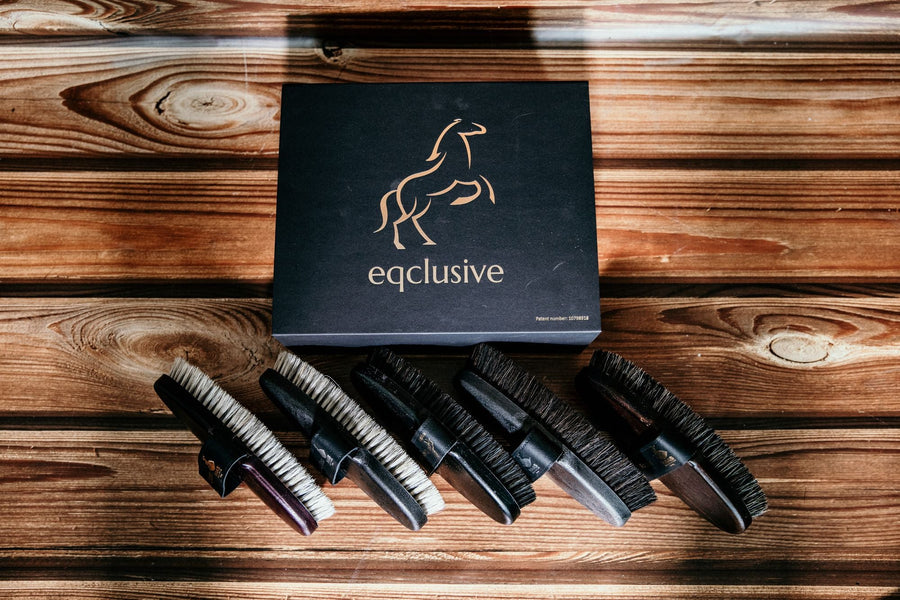
- Select the Right Tool: You require a brush with natural bristles that can reach the skin without scratching. A high-quality horsehair brush, such as those found in Eqclusive’s tailored packs, is ideal because the natural fibers communicate "softness" to the horse's receptors.
- The Starting Position: Stand at the horse's shoulder, facing toward their tail. Place your non-brushing hand gently on the horse’s neck to ground them.
- The Motion: Use long, slow, rhythmic strokes starting from the base of the neck, moving over the scapula (shoulder blade), and finishing at the withers.
- The Tempo: The strokes should be slow: roughly one stroke every three seconds. This rhythm mimics the resting heart rate of a relaxed horse.
-
Observe the Feedback: During this minute, watch for signs of "Vagal release":
- Lowering of the head.
- Licking and chewing.
- Deep sighs or rhythmic blinking.
- Softening of the eye and ears.
By dedicating just sixty seconds to this specific area before moving to the rest of the body, you are essentially "setting the thermostat" for the horse’s nervous system.
Practical Translation: From the Stable to the Saddle
Why does this matter for your ride? A horse that begins a training session in a parasympathetic state is physically more capable of performing.
When a horse is stressed (SNS dominant), their fascia: the connective tissue surrounding muscles: tightens. This creates "bracing" in the neck and back, making it nearly impossible for the horse to truly soften into the contact or engage their hindquarters. By using the Shoulder Minute to regulate the ANS, you are pre-emptively addressing physical resistance. You aren't just cleaning the horse; you are performing a light form of neurological bodywork.
For riders dealing with "hot" or anxious horses, this transition is vital. Rather than fighting for relaxation in the arena, you earn it in the stable. It is one of the few simple rules for successful training that is often overlooked in favour of complex gadgets.

The Eqclusive Perspective: Tools as Communication
At Eqclusive, we believe that a brush is not just a cleaning tool; it is a medium for communication. This is why our approach to grooming is system-based rather than product-based.
Generic, mass-produced brushes often use stiff synthetic bristles that "ping" against the horse's hair, creating static and surface-level irritation. To the horse’s nervous system, this feels like "white noise": irritating and distracting.
In contrast, the Eqclusive systems: such as our Haas brush packs: are designed to work in a specific sequence. The first brushes in our packs are designed to clear the skin interface, stimulating circulation and fascia without triggering a "flight" response. By the time you reach the finishing brushes, the horse is already neurologically relaxed, allowing the natural oils to rise to the surface for a genuine, healthy shine.
We don't just want your horse to look better; we want them to feel better. The "Shoulder Minute" is the perfect entry point into this philosophy of horse-centred grooming.
Conclusion: A Ritual of Regulation
The next time you pick up a brush, remember that you are holding a key to your horse's internal state. The Shoulder Minute is a small investment of time that yields significant returns in safety, performance, and the horse-human bond.
By shifting our focus from the surface to the system, we transform grooming from a chore into a ritual of regulation. We stop grooming "at" the horse and start grooming "with" them.
If you are ready to elevate your grooming routine and experience the difference that a science-led approach can make, explore our range of coat-specific grooming packs and discover the tools designed for the horse’s ultimate comfort.
For more insights into the deeper benefits of grooming, you can explore our full guide on the science of the "Shoulder Minute" and nervous system regulation.


Leave a comment