



Why Horses Shed: The Real Reason Behind the Seasonal Coat Change
It’s still properly cold outside.
Yet your horse is shedding like it’s June — hair on your jacket, hair in the tack room, hair somehow everywhere.
If you’ve ever thought, surely it’s too early for this, you’re right to question it.
Here’s the truth: horses shed because the days are getting longer — not because the weather has warmed up.
In this article, we’ll break down what triggers horse shedding (without the lecture), what melatonin has to do with the seasonal coat change, and how to groom through it without wrecking the incoming coat or irritating the skin barrier.
Does temperature cause shedding in horses?
Temperature affects comfort.
It affects whether your horse feels warm, sweats, or needs a rug adjustment.
But it doesn’t run the coat calendar.
Day length does. Horses are wired for photoperiodism — a normal biological response to changes in light.
When daylight starts increasing after winter, the body reads it as a seasonal instruction: it’s time to transition the coat.
That’s why shedding can start while it’s still frosty in the mornings.
It’s also why horses under consistent stable lighting can start the coat change earlier than horses living out on a purely natural light cycle.
What does melatonin do in a horse’s coat cycle?
The “switch” begins at the eye.
Light hits the retina, the brain processes that timing, and the signal reaches the pineal gland.
The pineal gland produces melatonin — often called the “darkness hormone” because your horse produces more of it when nights are long.
Here’s what that means on the yard:
- Winter: longer nights = a longer melatonin signal. The body maintains the winter coat.
- Spring: shorter nights = a shorter melatonin signal. Hair follicles get the message to start letting go.
So if your horse is shedding while you’re still in gloves, they’re not confused.
They’re doing exactly what nature designed them to do.
What does “photoperiod” actually mean in practical terms?
Think of it like this:
Your horse’s body trusts the light more than it trusts your weather app.
A warm week in February doesn’t convince the body it’s summer.
But a consistent shift in day length does.
That’s why grooming and management in shedding season works best when you stop fighting the process and start supporting it.
Why does a horse’s coat look dull during shedding season?
Shedding season is messy at hair level.
You’ve got dead winter hair loosening, new coat coming through, and a build-up of dust, dander, and fine skin debris that sits in the coat like powder.
This is where the cuticle matters.
The cuticle is the outer layer of the hair shaft — overlapping keratin “tiles”.
When those tiles lie flat, the coat reflects light and looks glossy.
When they’re roughed up, the coat looks dull and grabs dust.
During shedding, the new coat is emerging underneath.
If you go at it aggressively, it’s easy to scuff the cuticle on that new hair — and you get the classic result: you’ve removed loads of hair, but the coat looks worse tomorrow.

How should you groom a horse when the winter coat is coming out?
You do need to lift dead hair.
You don’t need to strip the horse.
The aim is simple:
- Lift what’s already loose (dead hair + trapped debris).
- Finish by laying the coat back down (brush with the direction of hair growth).
That second step is the one most people skip.
And it’s the difference between “looks tidy and feels soft” and “looks fluffed up and dusty again tomorrow”.
A good finish helps the coat sit flatter, spreads natural oils more evenly, and leaves the surface less grabby for dust.

Why aggressive de-shedding is counterproductive (and what to do instead)
Shedding is hormonal and systemic.
Grooming helps remove what’s ready to come out.
It should not be used to force what isn’t.
When you go too hard, too often — especially with harsh tools — you can:
- irritate already sensitive spring skin
- disrupt the skin barrier and create more scurf
- roughen the cuticle on the new coat as it emerges
Our stance is firm: if your de-shedding leaves the coat feeling scratchy, the skin looking angry, or the finish worse the next day, you’re not helping — you’re overstripping.
A better approach is efficient lifting, then barrier-friendly finishing.
What’s the Eqclusive approach to shedding season?
At Eqclusive, we treat shedding as a coat-and-skin job — not just a “remove hair” job.
The goal isn’t maximum hair removed per session.
It’s a cleaner release of the winter coat without compromising the incoming coat or the skin underneath.
That’s exactly why we focus on brush systems rather than single “miracle” tools.
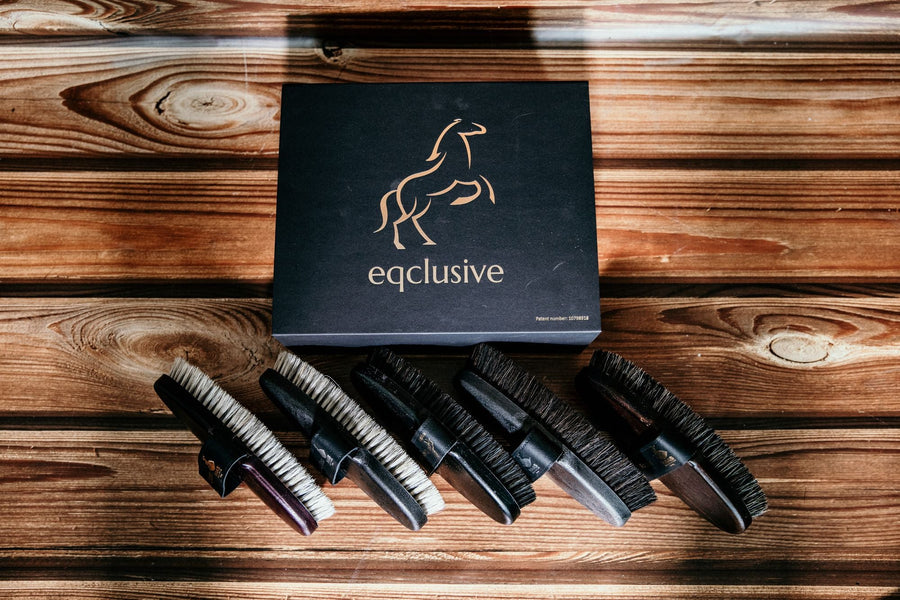
Our patented packs of brushes are designed to:
- lift loose hair efficiently
- reduce the need to scrub repeatedly over the same areas
- finish by re-laying the coat, so it stays smoother and less dust-grabby after grooming
When the grooming mechanics are right, you get less irritation, a better shine, and far less tomorrow’s work.
Conclusion: Your horse is shedding because the light has changed — so groom for the coat that’s coming
If you remember one thing, make it this: light, not temperature, is the main trigger behind horse shedding and the seasonal coat change.
That’s why it can start when it still feels like winter.
Your job isn’t to attack the coat.
It’s to support the transition: lift what’s ready, protect the cuticle on the new coat, and keep the skin barrier calm.
If you want a cleaner shed with a better finish (and less mess the next day), use a grooming system that removes loose hair efficiently and then lays the coat properly.
Shop our shedding-season essentials:
Explore Eqclusive grooming packs and shedding tools
To learn more about how we approach coat care, visit our About Us page or browse the Eqclusive blog.

Leave a comment