



Why Horses Sweat: Understanding Latherin and Effective Post-Work Cooling
You’ve done the work, you’ve untacked, and your horse is still hot — with that sticky, “soapy” foam sitting under the saddle area and between the legs. You hose, you walk, you wait… and it feels like nothing is shifting it fast enough.
This article explains what that foam actually is, why horses sweat the way they do, and how to cool a horse down faster and more safely after hard work — without guesswork in the wash bay.
What is latherin (and why does sweat look “soapy”)?
Horses are one of the few mammals that can sweat heavily to control body temperature. The catch is the coat itself: hair is naturally oily and water-repellent, so plain water tends to bead and run off.
That’s where latherin comes in.
Latherin is a natural surfactant (a soap-like protein) found in equine sweat and saliva. Surfactants reduce surface tension, which helps water spread.
In practical terms, latherin helps sweat wet the hair shaft properly, so it can move through the coat and sit on the surface as a thin film. A thin film evaporates faster than droplets — and evaporation is the main way a working horse loses heat.
The white foam you see isn’t “dirty sweat”. It’s latherin doing its job, whipped up by friction from tack, movement, and rubbing points.
How to cool a horse faster after work (what actually works)
A horse cools down through a mix of mechanisms, but after exercise the big two are:
- Conduction: cold water pulling heat out through direct contact
- Evaporation + convection: that water (and sweat) evaporating, helped by moving air
So the goal in the wash bay is simple: move heat out fast, over a large area, without trapping warmth in the coat.
The practical method: continuous water over large muscles + airflow
Start with the areas that generate and hold the most heat:
- neck and shoulder
- chest
- hindquarters
- between the back legs (often a heavy sweat zone)
Use continuous water application, not one-off splashes. Water warms quickly once it’s sitting on the body. If it’s just sitting there, it stops helping.
Then add airflow. Open doors, stand in a breeze, or use a fan at a sensible distance. Air movement is what makes evaporation work.
This is also why a horse can stay “hot and soapy” for ages in still, humid conditions: the coat is wet, but the heat isn’t leaving efficiently.
Scrape vs pour: when a sweat scraper helps (and when it slows you down)
The sweat scraper debate is usually framed as habit. It’s actually about air conditions.
Scrape in dry air (when evaporation is easy).
If the air is dry and there’s a breeze (or good airflow), scraping removes warm water sitting in the coat so fresh cool water and moving air can do their job.
Don’t scrape in humid, still air (when evaporation is poor).
If the air is muggy and still, scraping can waste time. In those conditions, the fastest route is often keep pouring/running water over the big muscle groups so conduction keeps pulling heat out.
A simple yard rule:
If the water is drying quickly, scraping makes sense. If nothing is drying, keep the water moving and prioritise airflow.
Eqclusive POV: presentation waits for safety
Sweat foam looks dramatic, but it’s not the real problem. The risk is a horse that stays too hot for too long, especially after fast work, jump schools, or a hard schooling session.
Our stance is simple: presentation waits for safety.
Get the horse cool first. Then worry about the coat.
Once your horse is genuinely cool (breathing settled, skin temperature normalised), you can deal with what sweat leaves behind: salts and residue that can make the coat feel sticky and “spiked”.
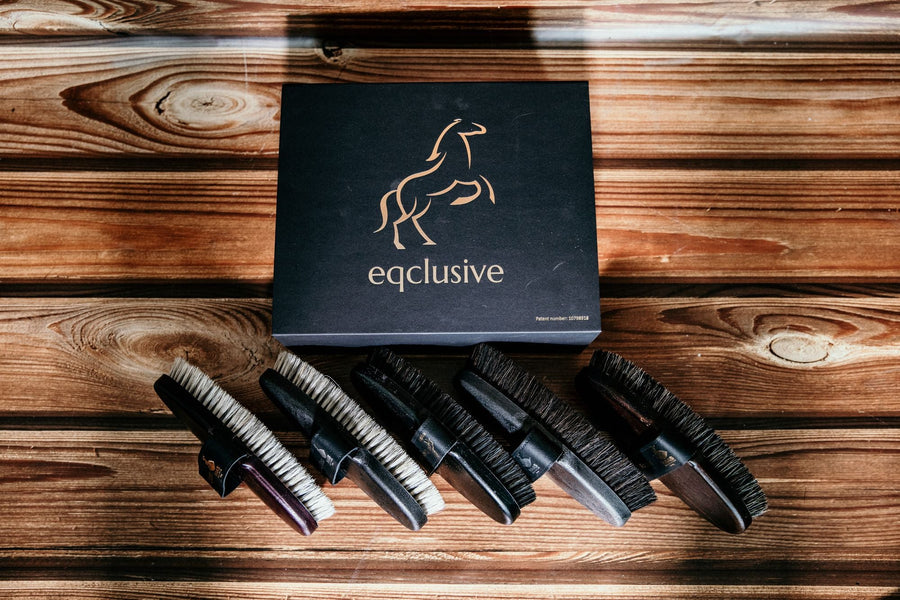
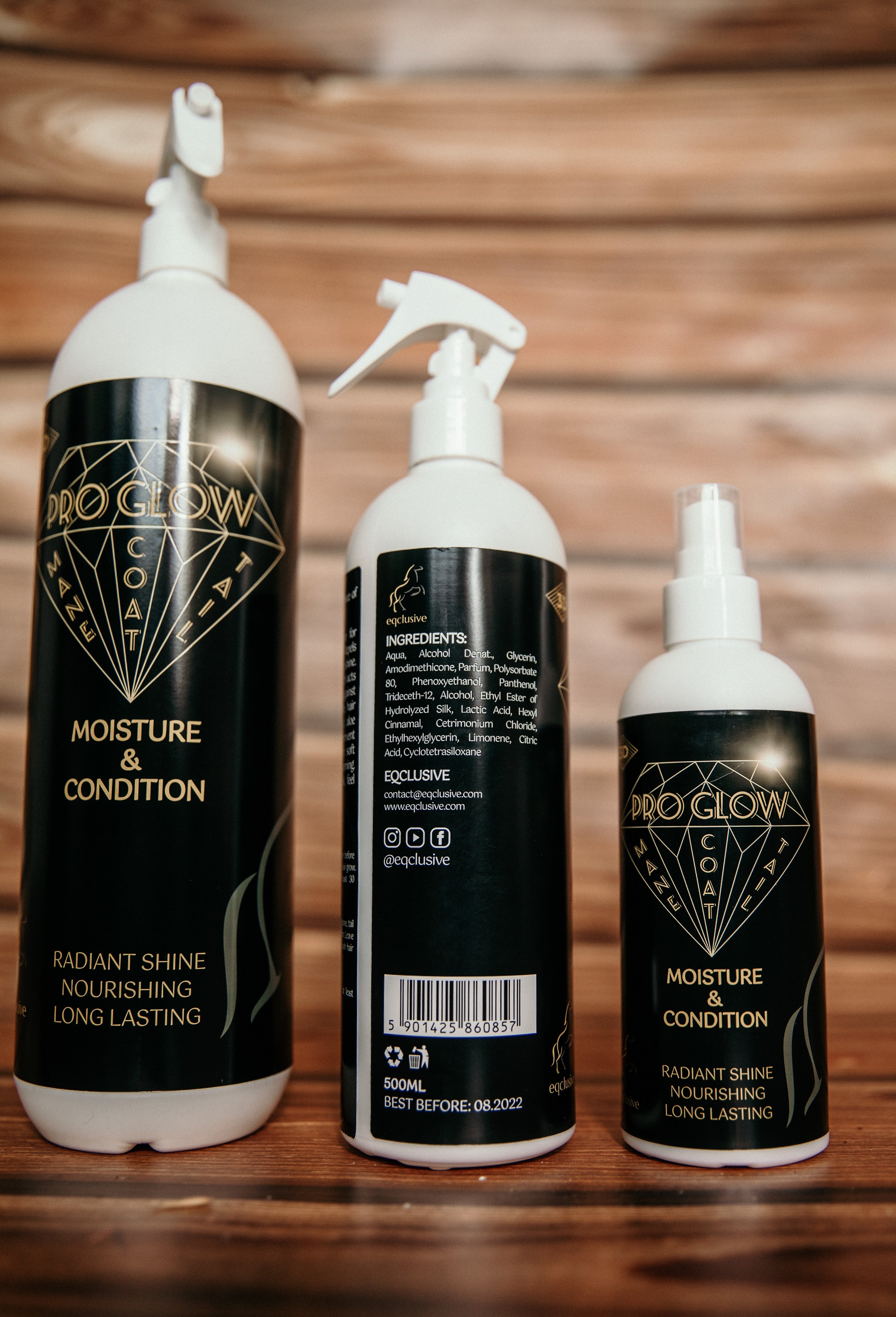
That’s when finishers earn their place. Use your Eqclusive finishing products only once the horse is cool and either dry or nearly dry, to help restore a neat lay and a properly groomed feel — rather than trying to “gloss over” a horse that’s still overheating.

The right moment to use your finishing tools
When the horse is cool and dry, the finish becomes simple and effective.
Brush with the hair, let the coat settle, and only then reach for a finisher if you want that smooth, show-ready lay. Used at the right time, finishing tools help the coat look tidy without masking sweat residue.

Summary: why horses sweat (and how to cool them properly)
That “soapy” foam after work is latherin — a natural, soap-like protein that helps sweat wet the coat so it can evaporate and carry heat away.
If your horse stays hot, the answer is rarely more scrubbing. It’s usually better cooling mechanics:
- continuous water over big muscle groups
- airflow to support evaporation
- scrape only in dry air (in humidity, keep the water moving)
And from Eqclusive’s perspective: get the horse safe first, then make them look good. Finishers belong at the end of the process, not the middle.
Want a grooming system that matches your horse’s coat and your goals? Learn more about our specialised grooming packs on Eqclusive: https://eqclusive.com/#
Leave a comment